Simplifying diabetes management with user-friendly insulin tracking
We partnered with a leading medical device company to design an MVP app for their smart insulin pen cap and glucose monitor. Facing tight timelines and regulatory challenges, I worked across nine teams—including design, engineering, and medical experts—balancing compliance requirements, accessibility needs, and real user feedback to create a solution that helps people manage their diabetes with less stress and more confidence.
Glorified pixel-pusher and so much more
Design lead, Product strategy, User research, Interaction, Visual design, Prototyping & testing, IA
The need for easier, more effective diabetes care

Managing Type 2 diabetes is tough—keeping track of blood sugar, calculating insulin doses, and dealing with the emotional toll can be overwhelming. Our goal? Make life easier by helping people get to the right insulin dose with confidence through a seamless, connected experience.
Designing with speed and care
A top medical device company came to us with an urgent challenge: create an MVP companion app for their smart insulin pen cap and blood glucose (BG) monitor. The ask? Make insulin therapy easier and build trust between patients and healthcare providers.
But there was a major hurdle:
Their first app had failed FDA testing, and time was running out to release a working solution.
As newcomers to digital products, they needed expert guidance to bring their vision to life.
We had to balance strict regulations with a seamless, user-friendly experience.
This wasn’t just about designing an app—it was about setting the foundation for a digital ecosystem while ensuring every decision put people with diabetes (PwD) first.
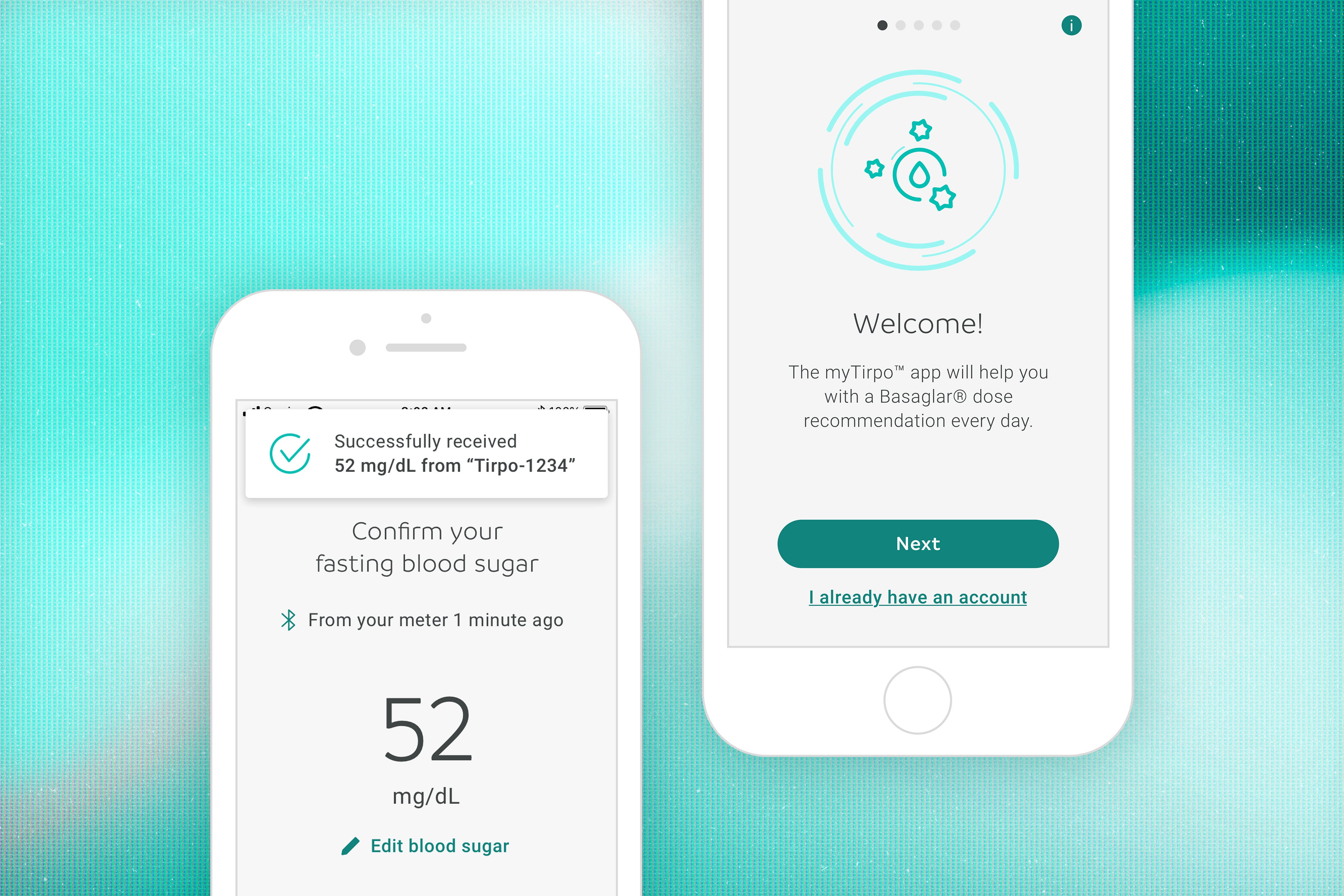
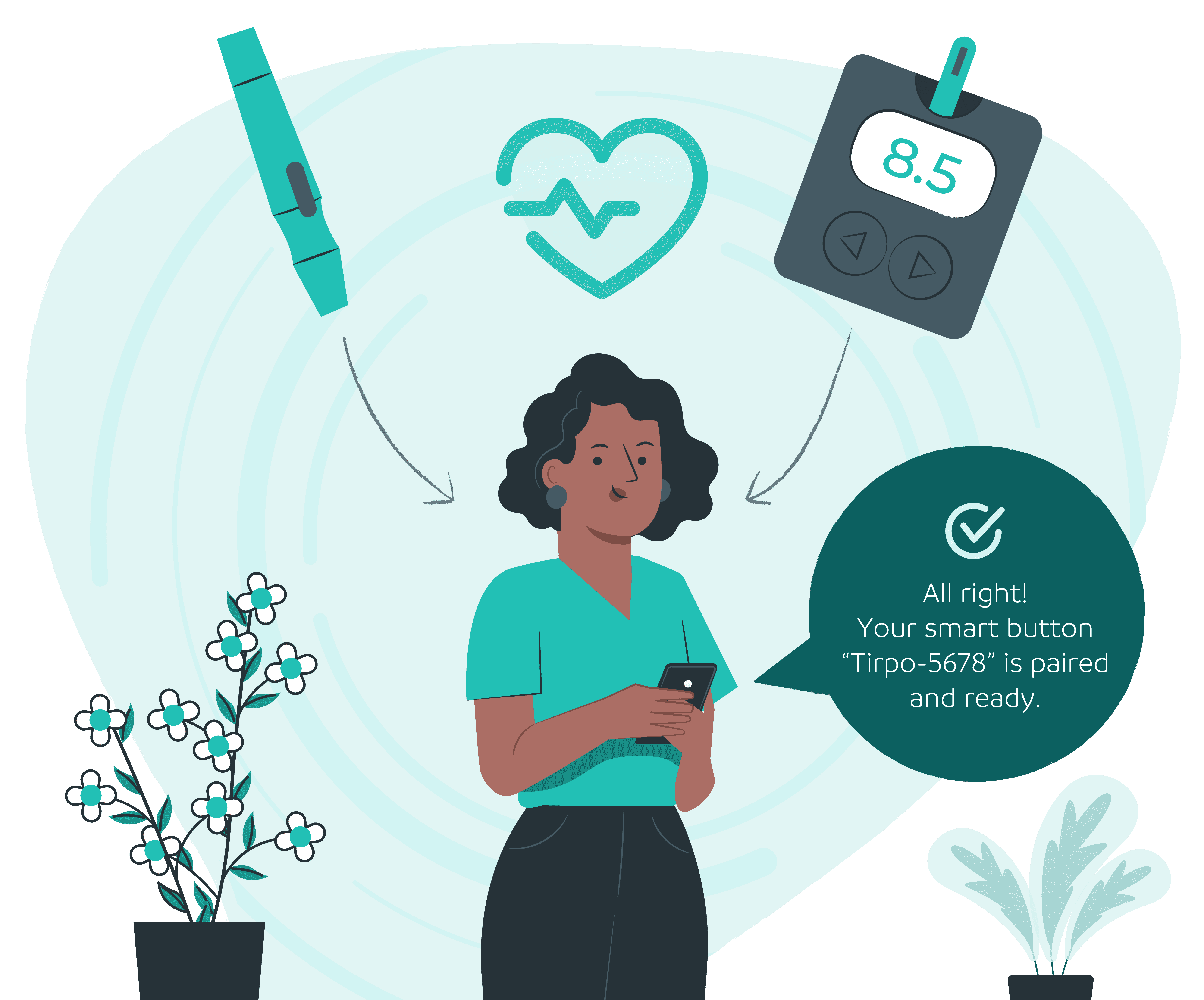
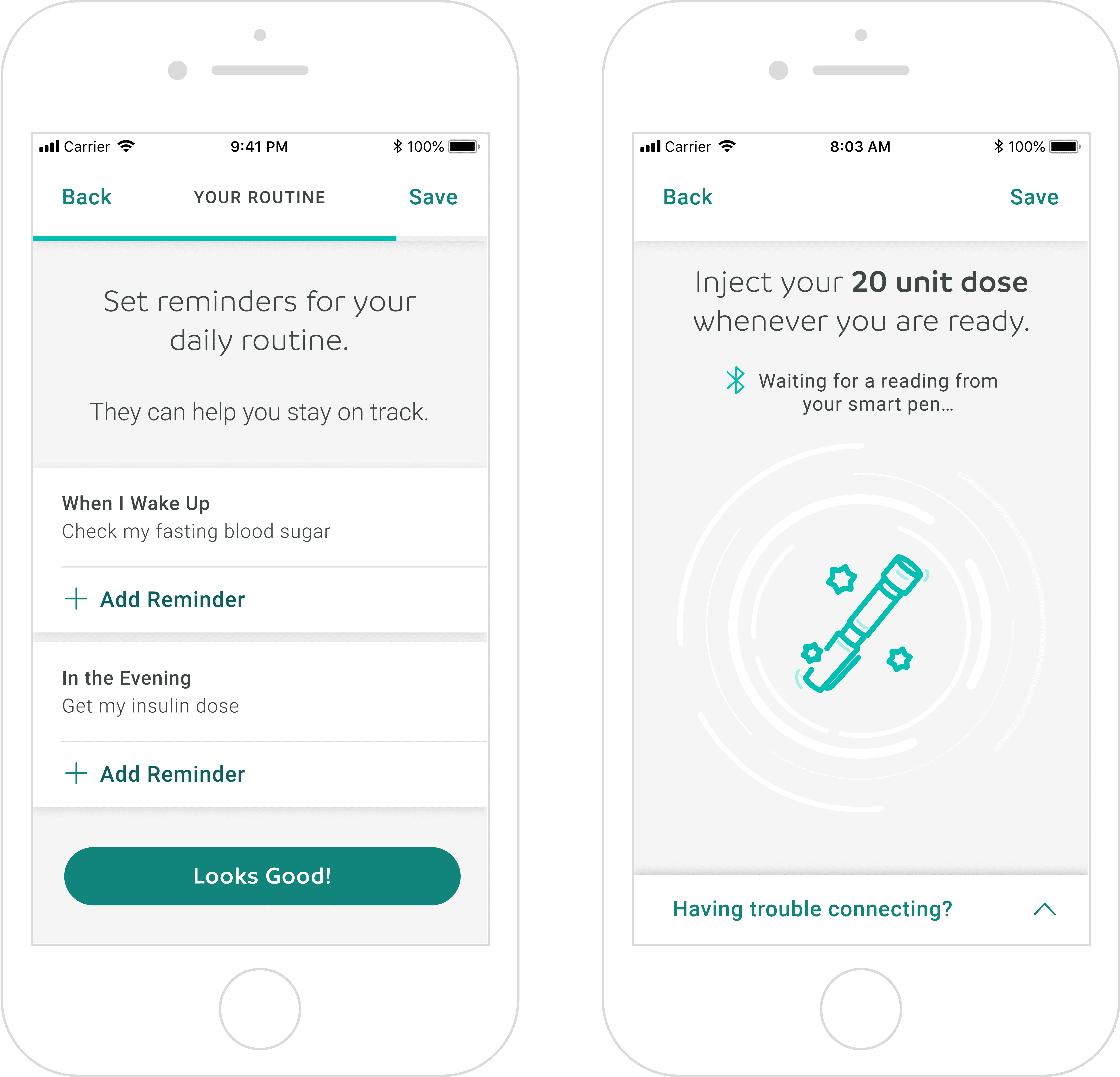
The open-loop system, mainly used by people with Type 2 diabetes, helps guide dosing decisions. The app suggests doses based on blood sugar readings and insulin intake, while Bluetooth-connected devices assist with testing and injections.
Smarter can be simpler
Managing Type 2 diabetes shouldn’t feel like a chore. Our approach focused on three key pillars to make the process easier, smarter, and less stressful:
Effortless data logging
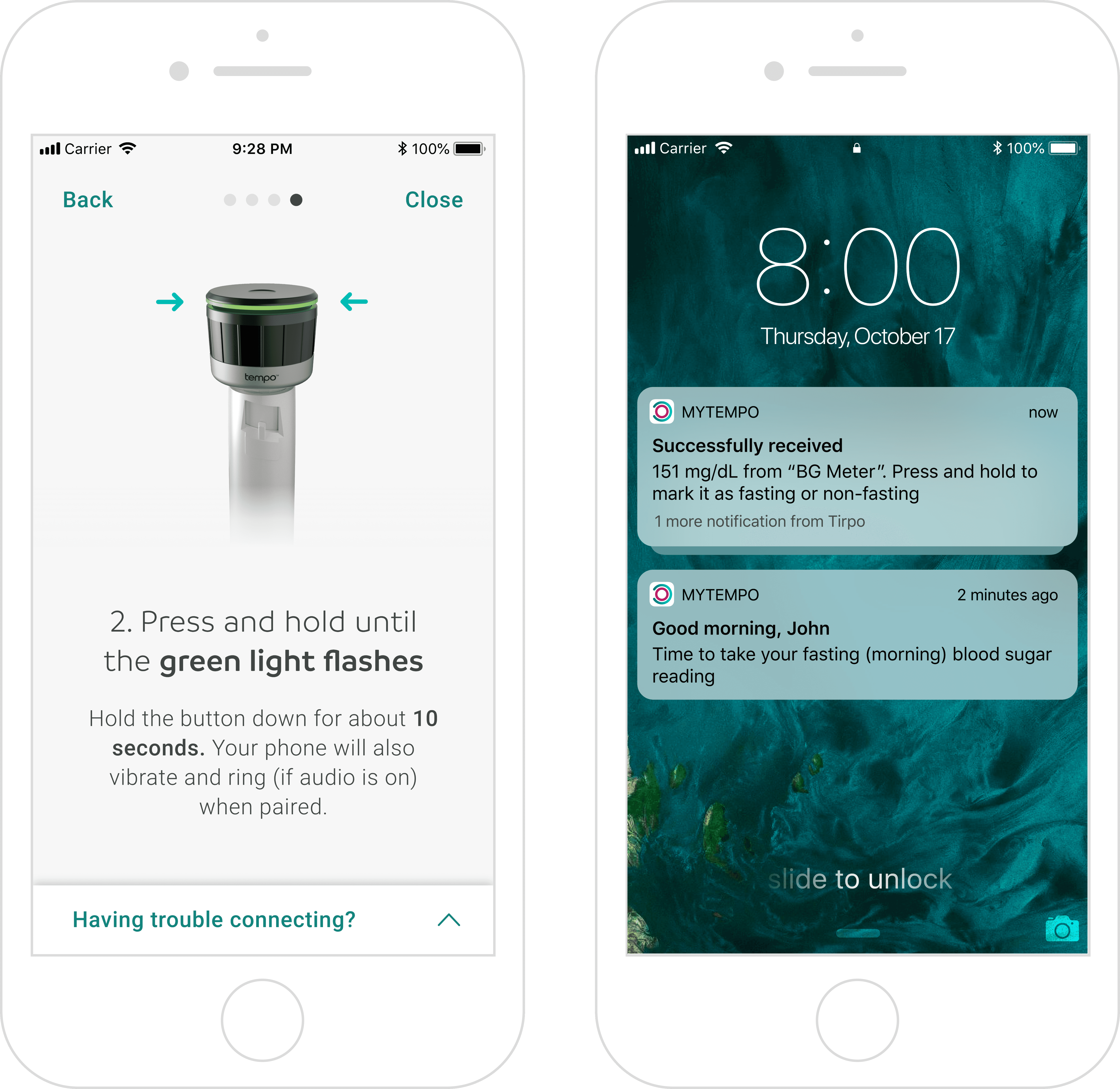
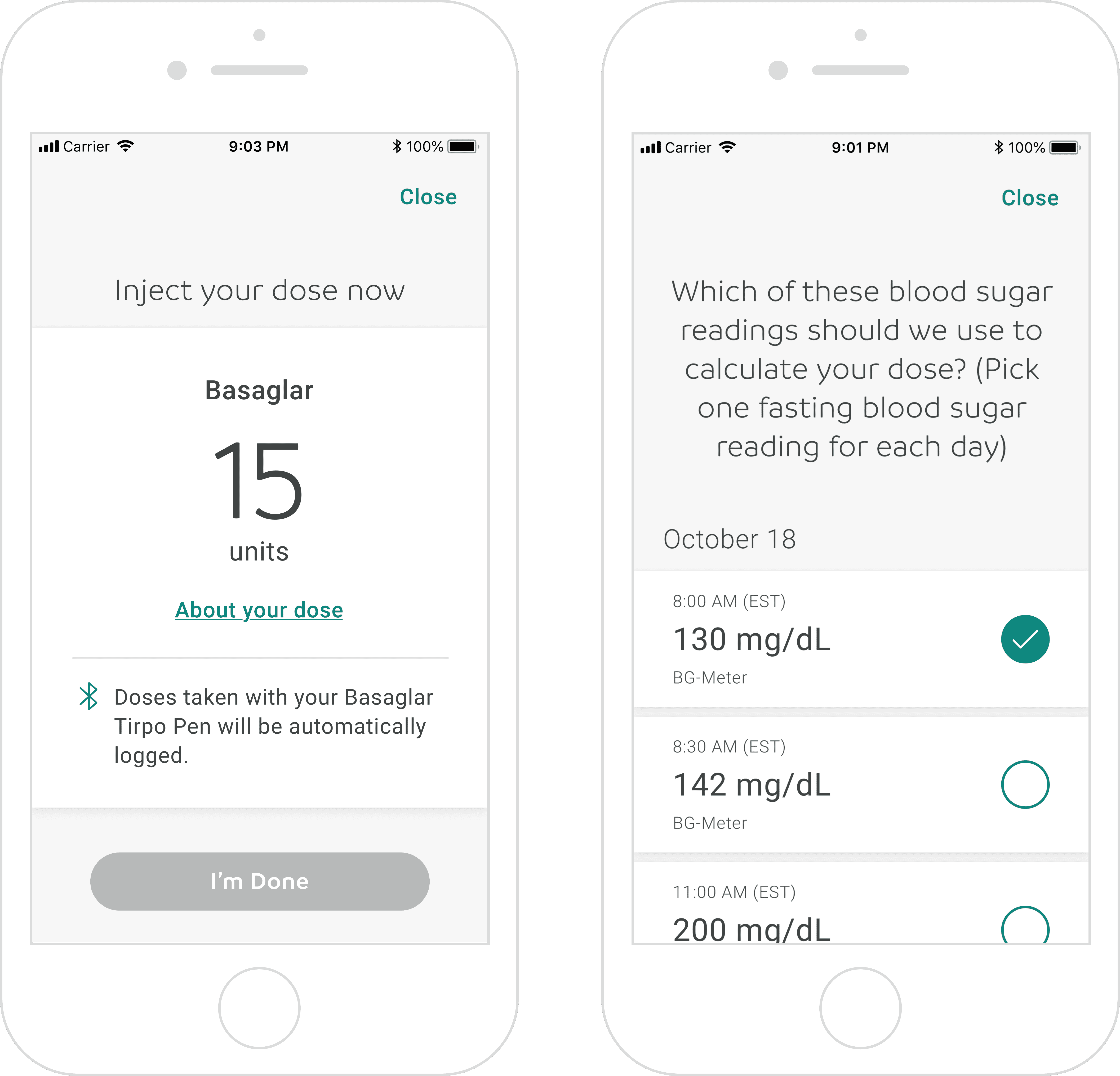
Manual tracking can be frustrating and error-prone, with many tools requiring tedious data entry that makes diabetes management more challenging. By integrating smart devices, we enabled seamless glucose logging—whether automatically or with a quick tap—while designing a more intuitive experience that lets users focus on their health, not the hassle of tracking.
Smarter dosing, less stress
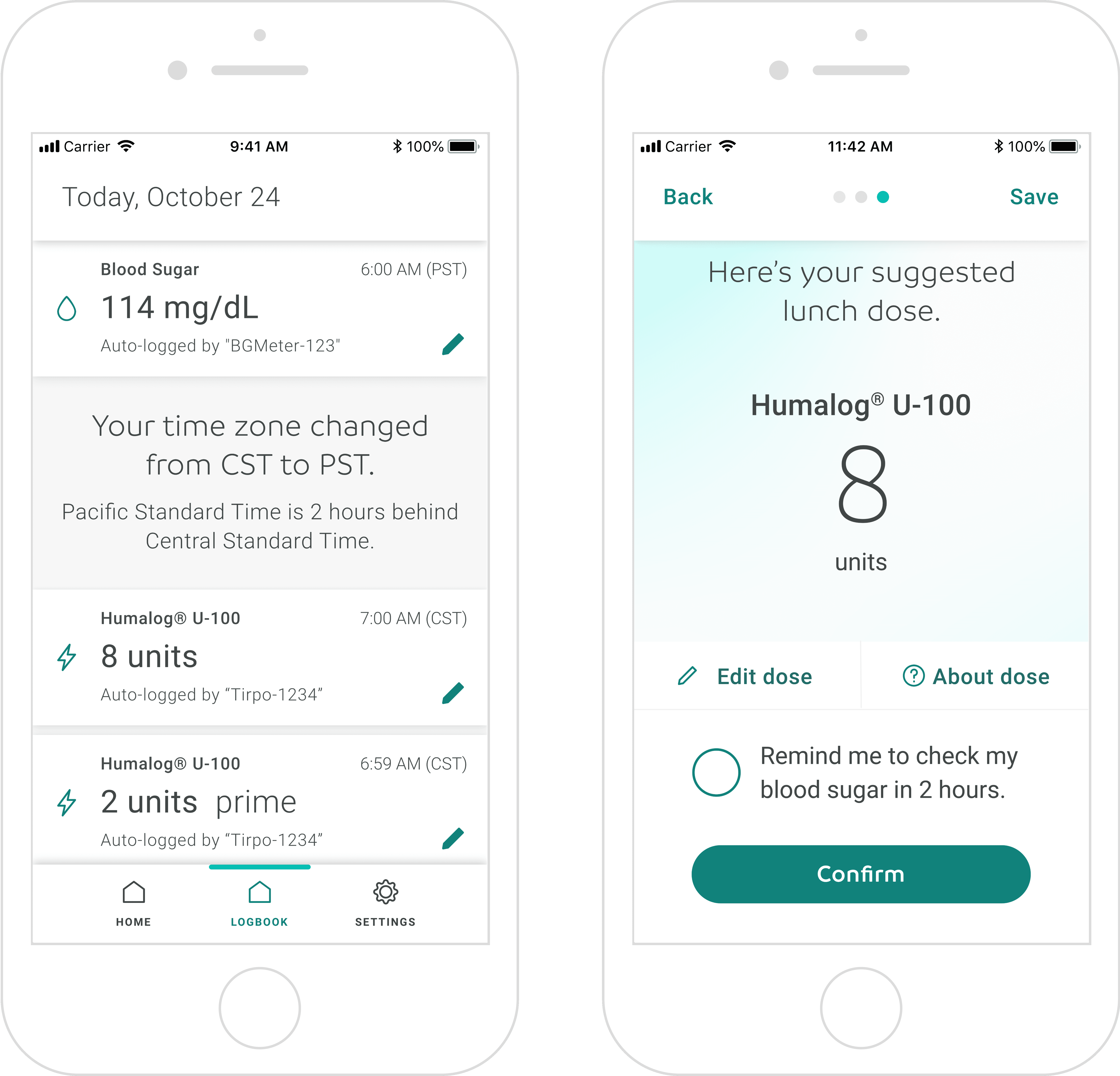
Managing diabetes is a daily challenge, from tracking blood sugar to calculating insulin doses. To ease this burden, we simplified data collection so the system could provide accurate insulin dose recommendations every three days—giving users confidence in their treatment while reducing the stress of constant calculations.
Stronger doctor-patient connections
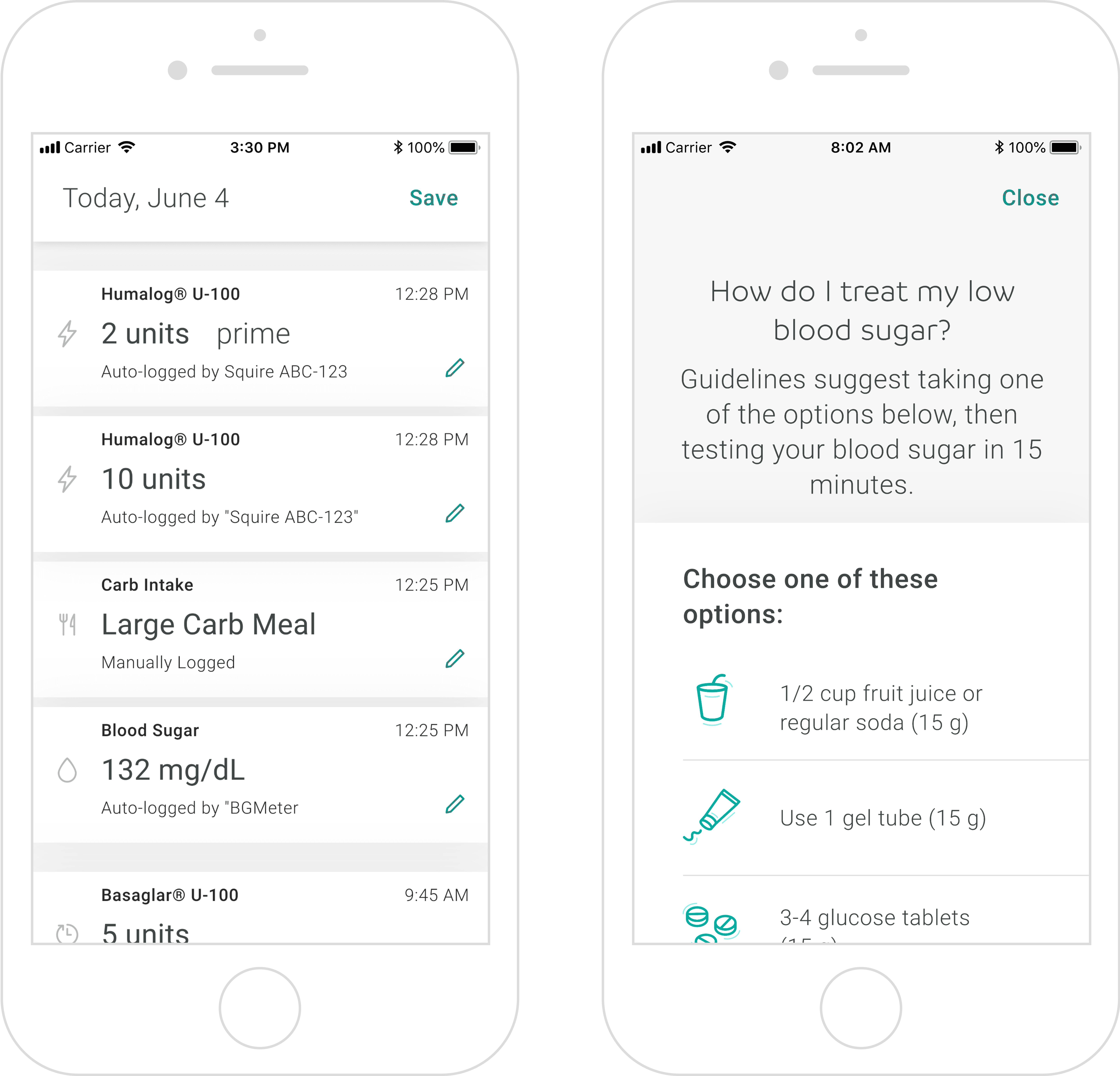
Lack of clear communication can lead to missed doses and anxiety. By ensuring data logs were accurate and easily accessible/editable, we empowered healthcare providers with a clearer picture of their patients' progress—leading to more productive conversations, stronger trust, and better care.
Turning research into real-world confidence
Research was key to shaping the final product. To ensure users could achieve their goals effectively, we conducted two key studies:
Remote validation studies – multiple rounds of testing with 7–10 users per phase, refining features based on real feedback.
Final usability testing – assessing near-final designs to identify risks and meet regulatory requirements.
These insights helped us fine-tune interactions, ensuring users could navigate the experience with clarity and ease.
Make it clear, reassuring, and empowering
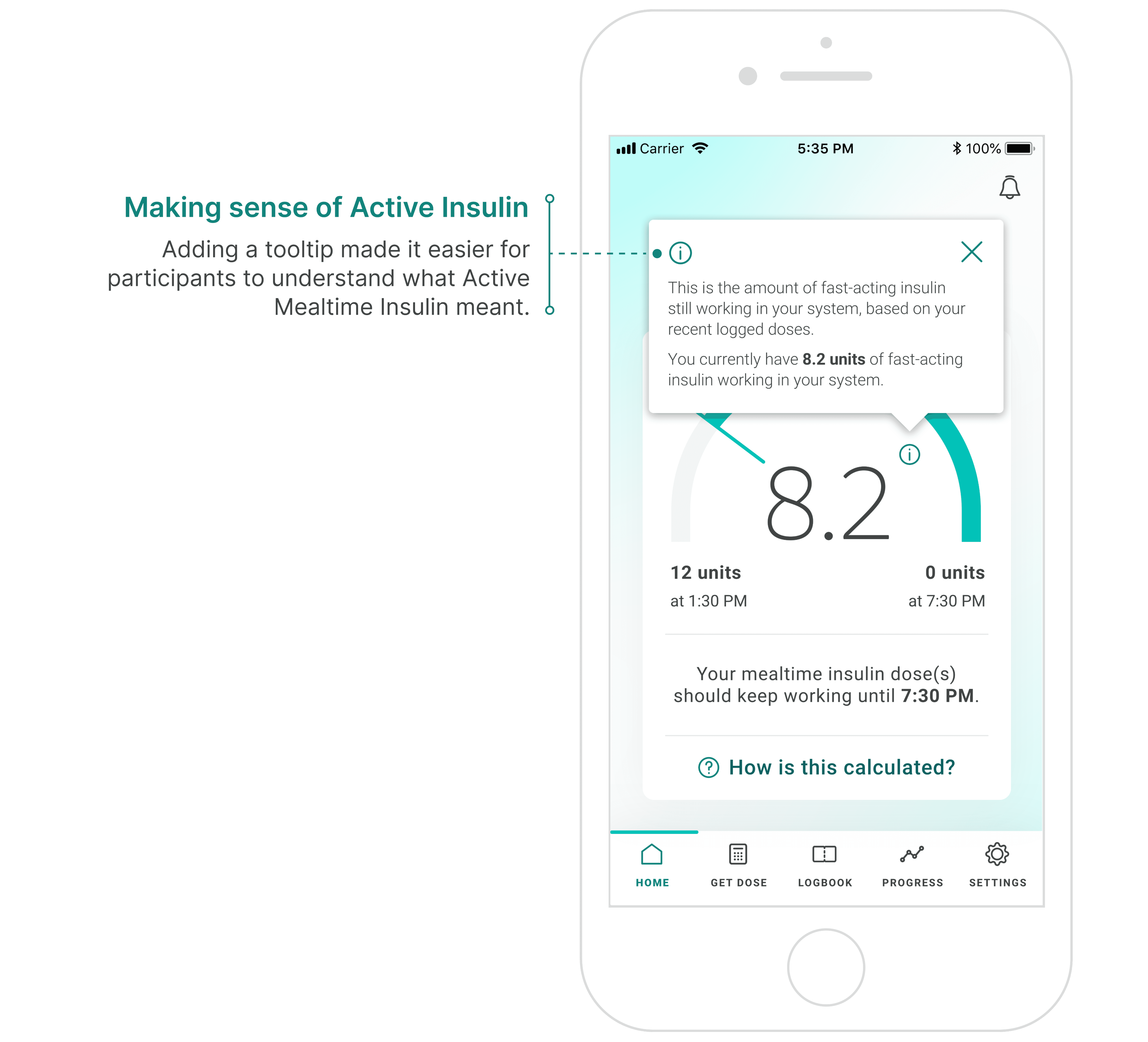
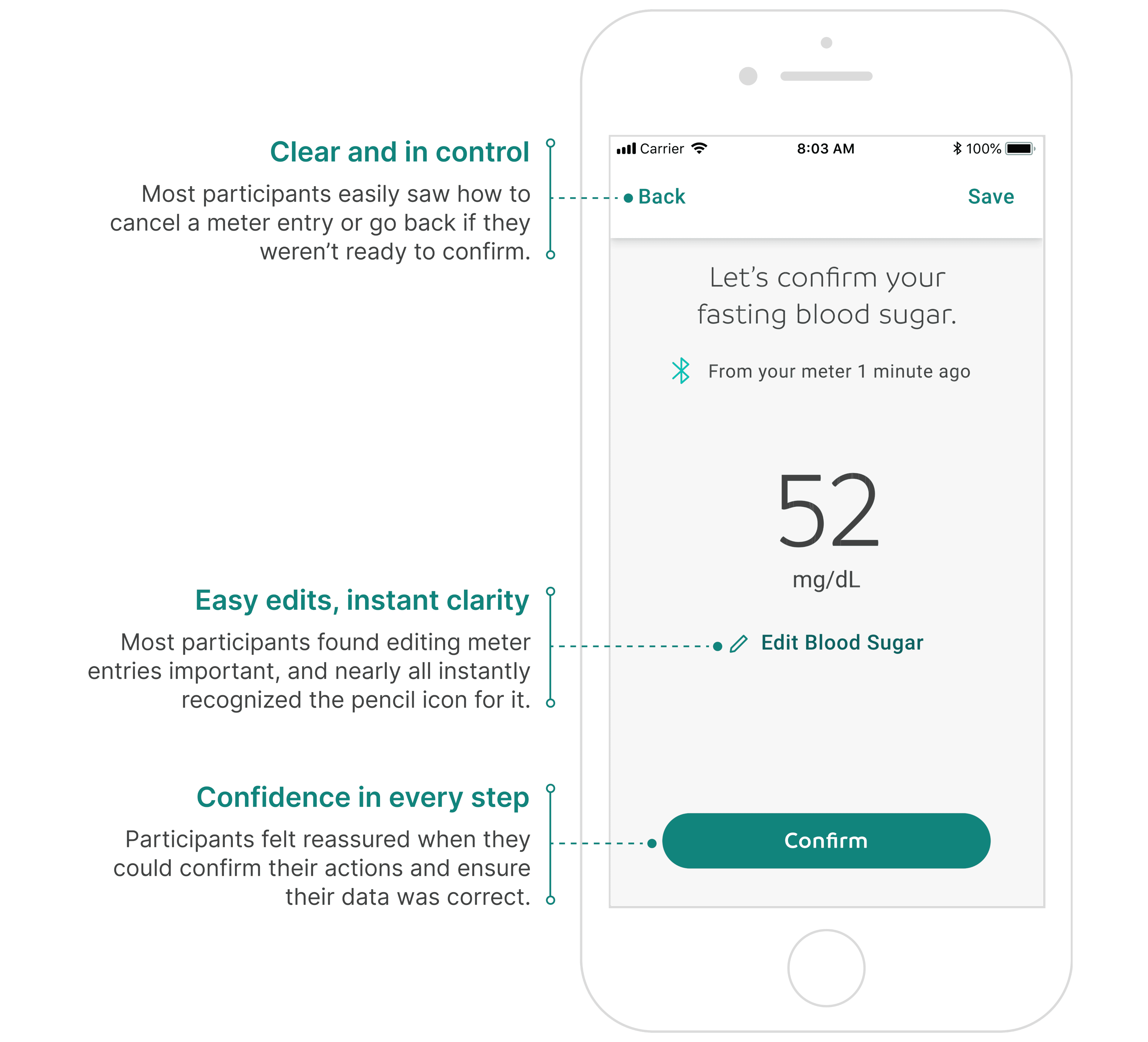
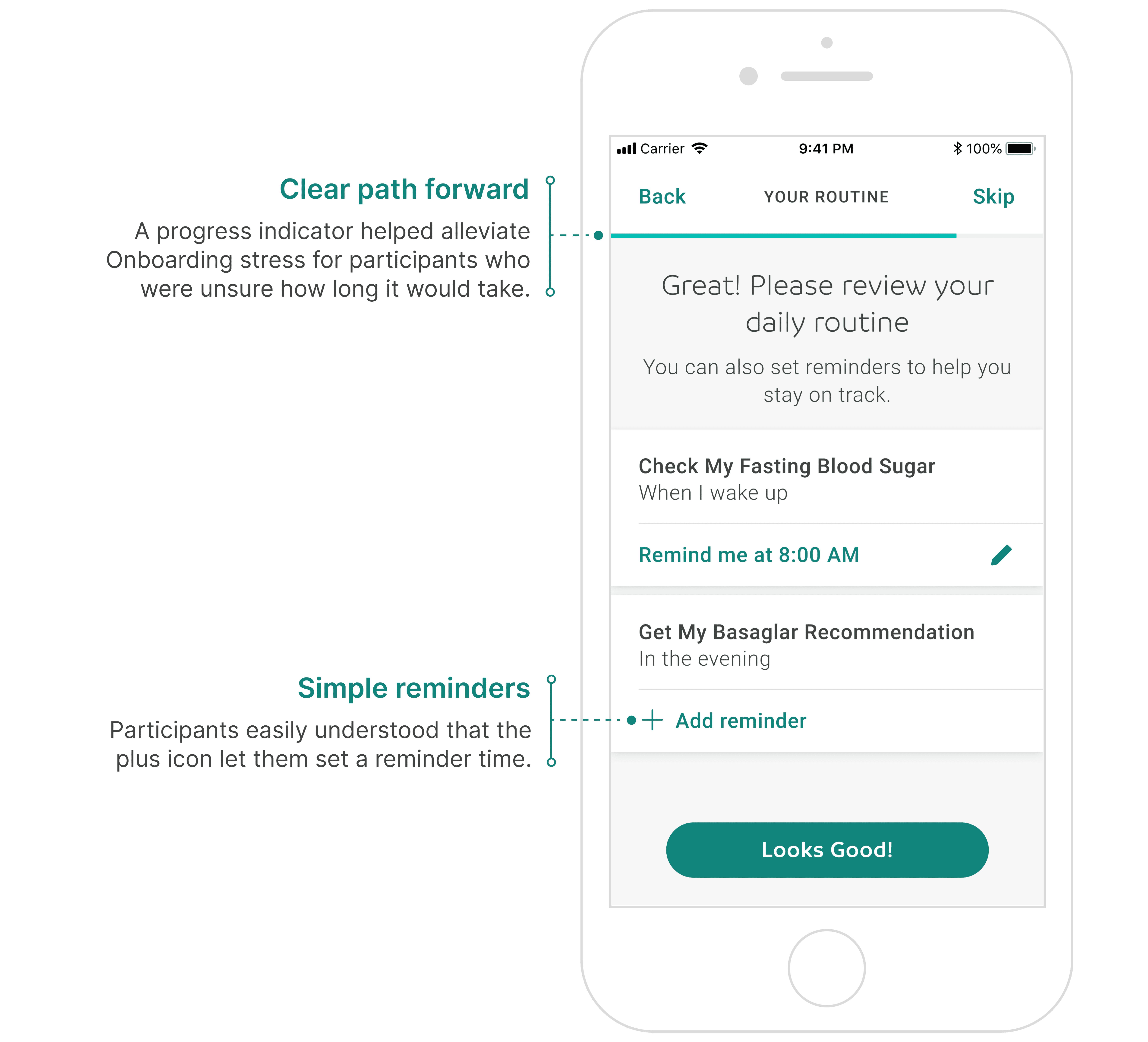
During user testing, we learned that most participants weren’t familiar with the term “Active Mealtime Insulin,” so we knew we needed to make that clearer. We also found that users felt more in control when they could easily check their information and make edits when something didn’t look right. This feedback showed us how important it is to let users review and adjust their data, helping them feel confident and empowered in managing their insulin therapy.
Nine teams, one purpose
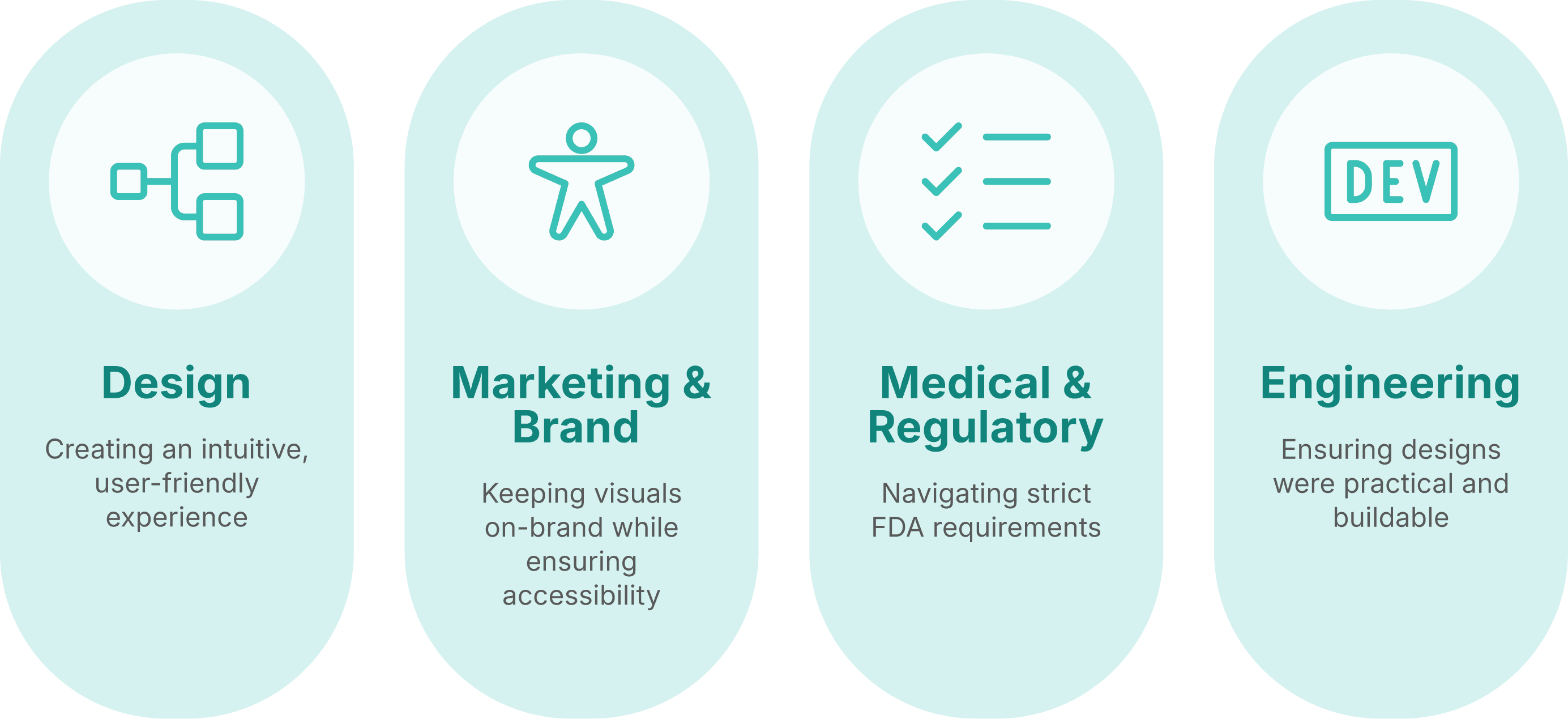
Designing a great app was just one piece of the puzzle—we also had to align nine different teams, each with its own priorities:
Tackling accessibility
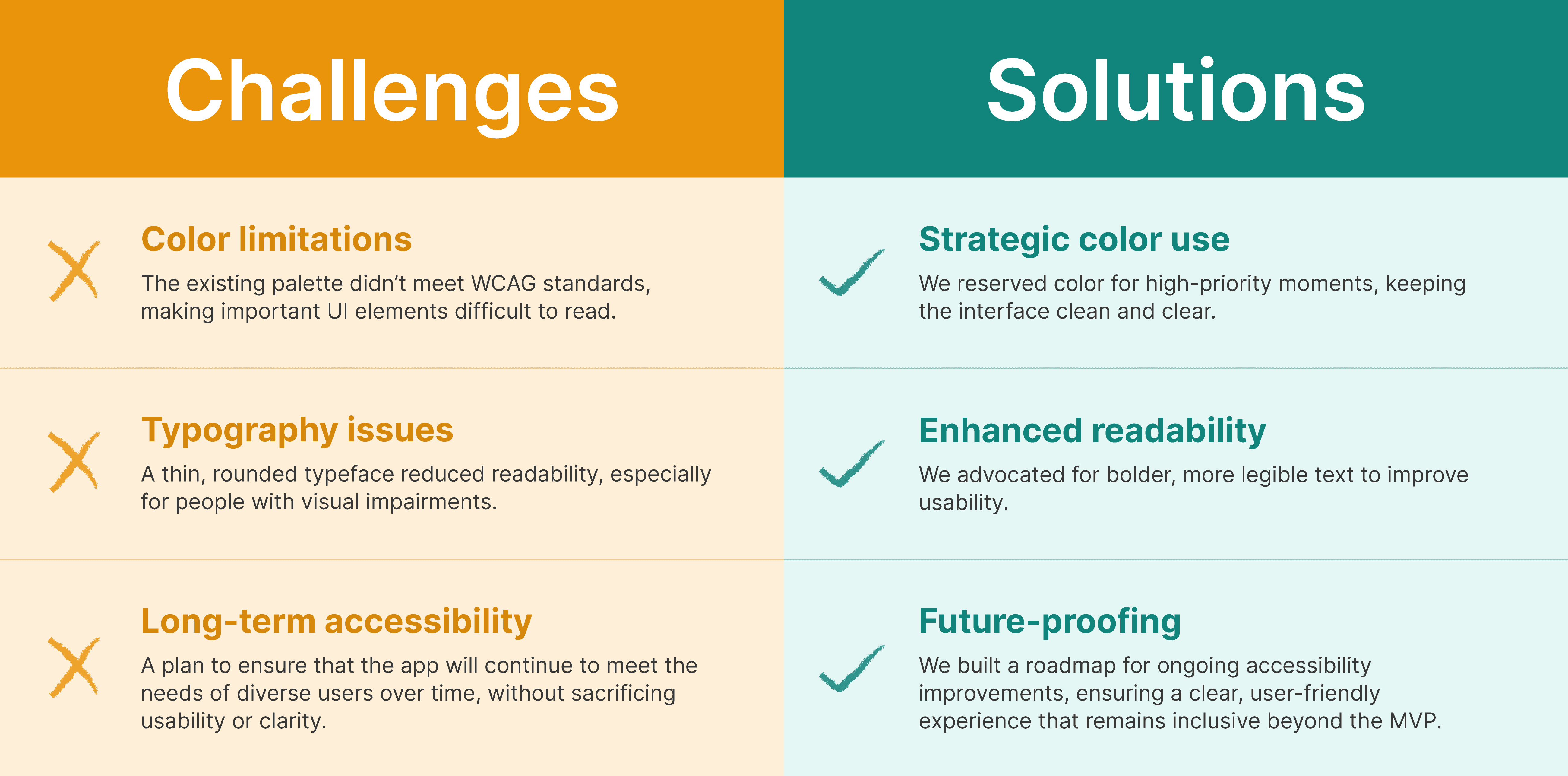
Accessibility isn’t just a checkbox—it’s essential for creating a truly inclusive experience. Below are some of the issues we tackled, ensuring a path for long-term accessibility improvements.
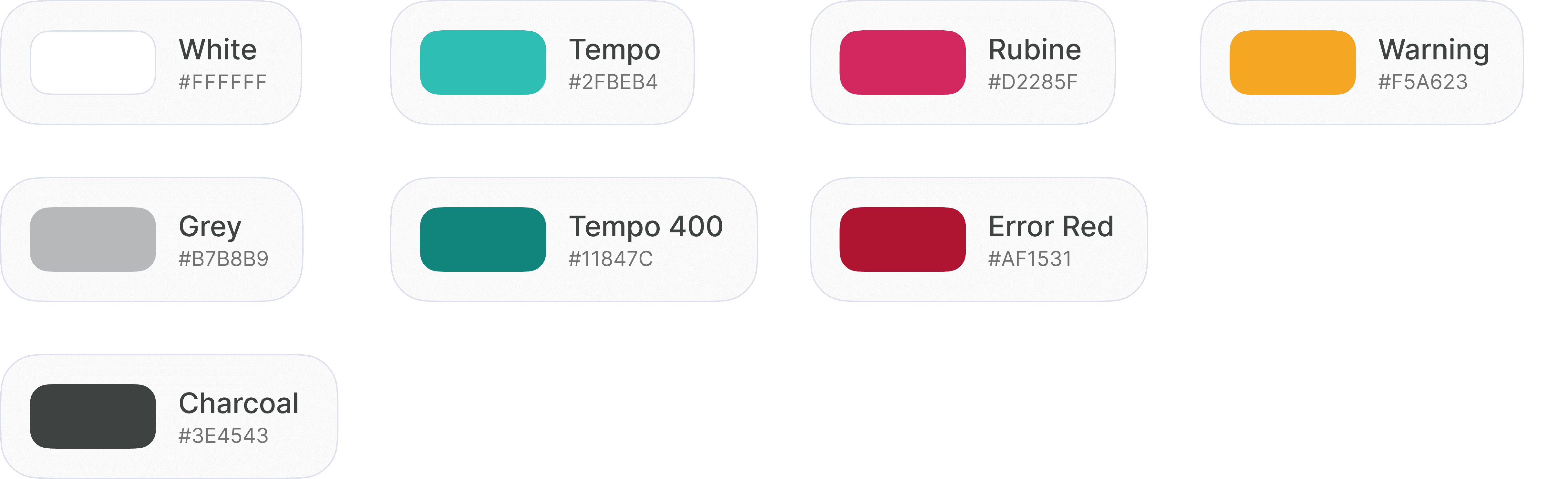
After conducting our research, we settled on the following color palette:
Partnering for a smooth build process
With our client new to digital product design, we took a hands-on approach to keep things running smoothly:
On-site team - worked side by side with their developers for real-time collaboration.
Office team - focused on finalizing specs, research, and designs for upcoming releases.
This hybrid setup kept communication clear, streamlined handoffs, and ensured a seamless shift from design to development.
Building a unified visual language
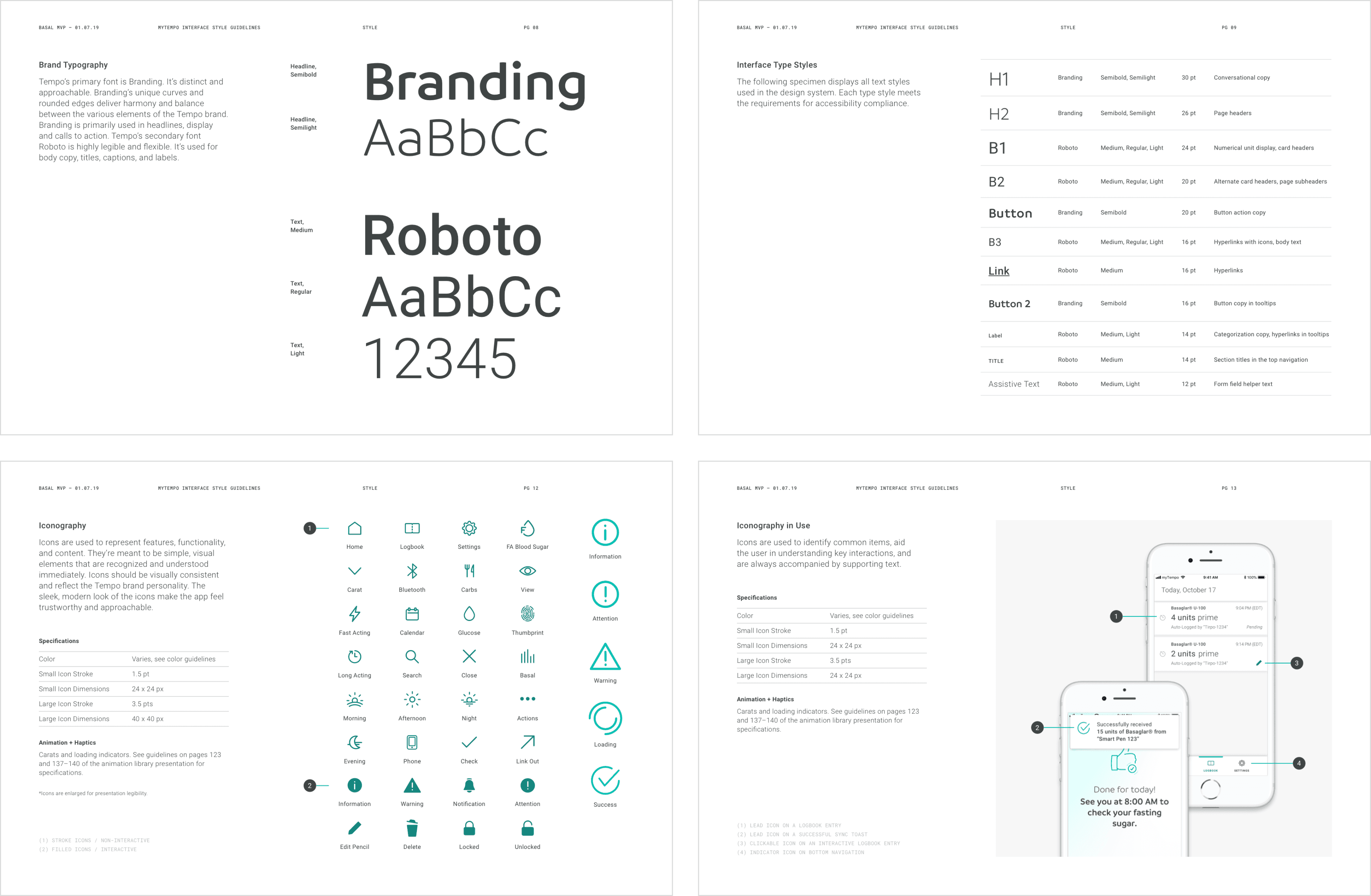
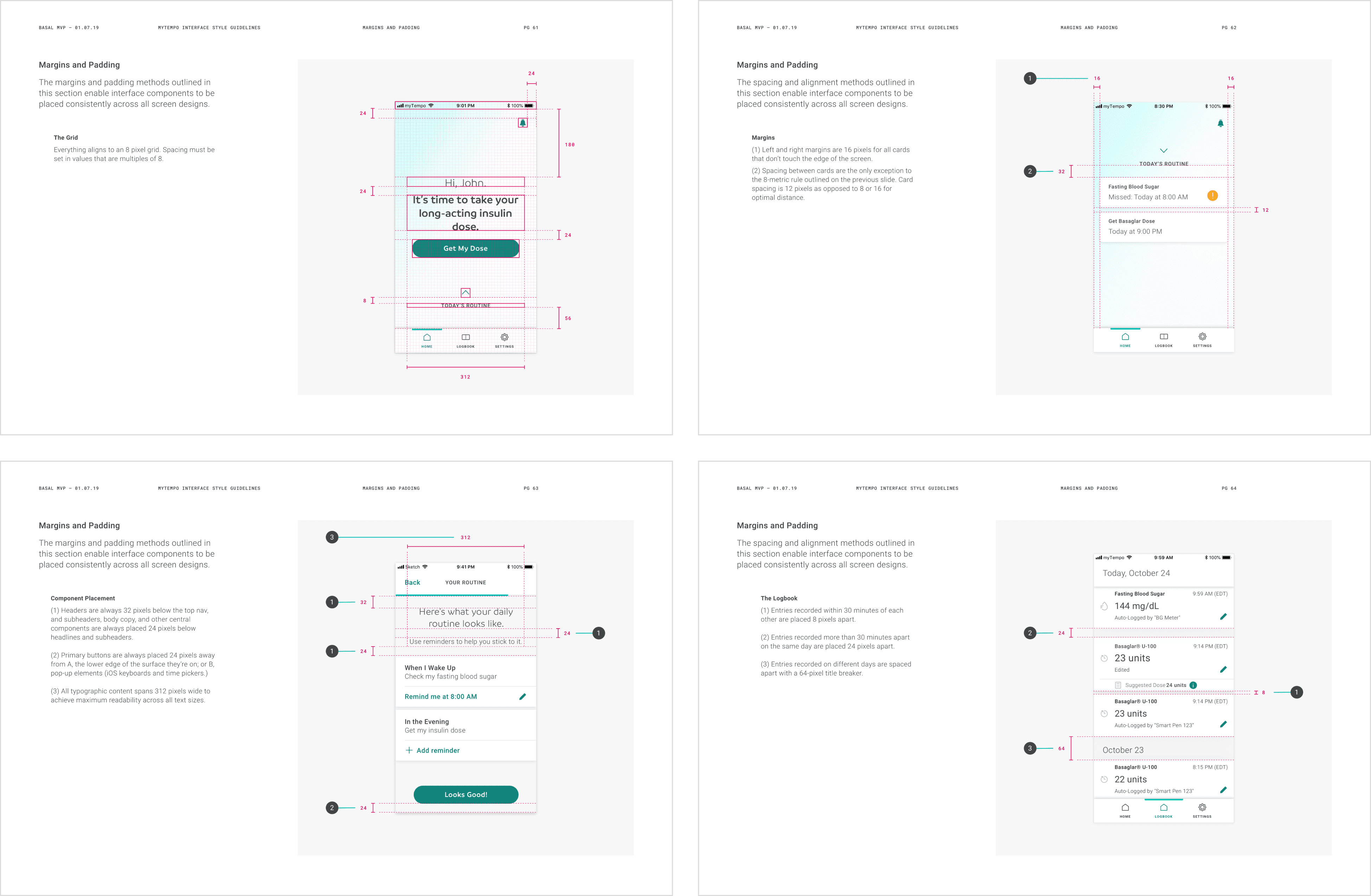
With a clear design direction in place, we built a style guide to keep everything on track. It covered iconography, typography, spacing, interface components, and elevation details—giving the development team a single source of truth. This ensured consistency and kept everyone aligned as the project evolved.
Before handing off to development, I made sure every screen was production-ready by carefully checking for any padding or typography inconsistencies across all flows.
Expanding the possibilities
The MVP met core needs, but we saw opportunities to enhance the experience. Progress tracking would help users view long-term health improvements, while CGM and API integrations would seamlessly connect glucose monitors and health platforms, simplifying diabetes management.
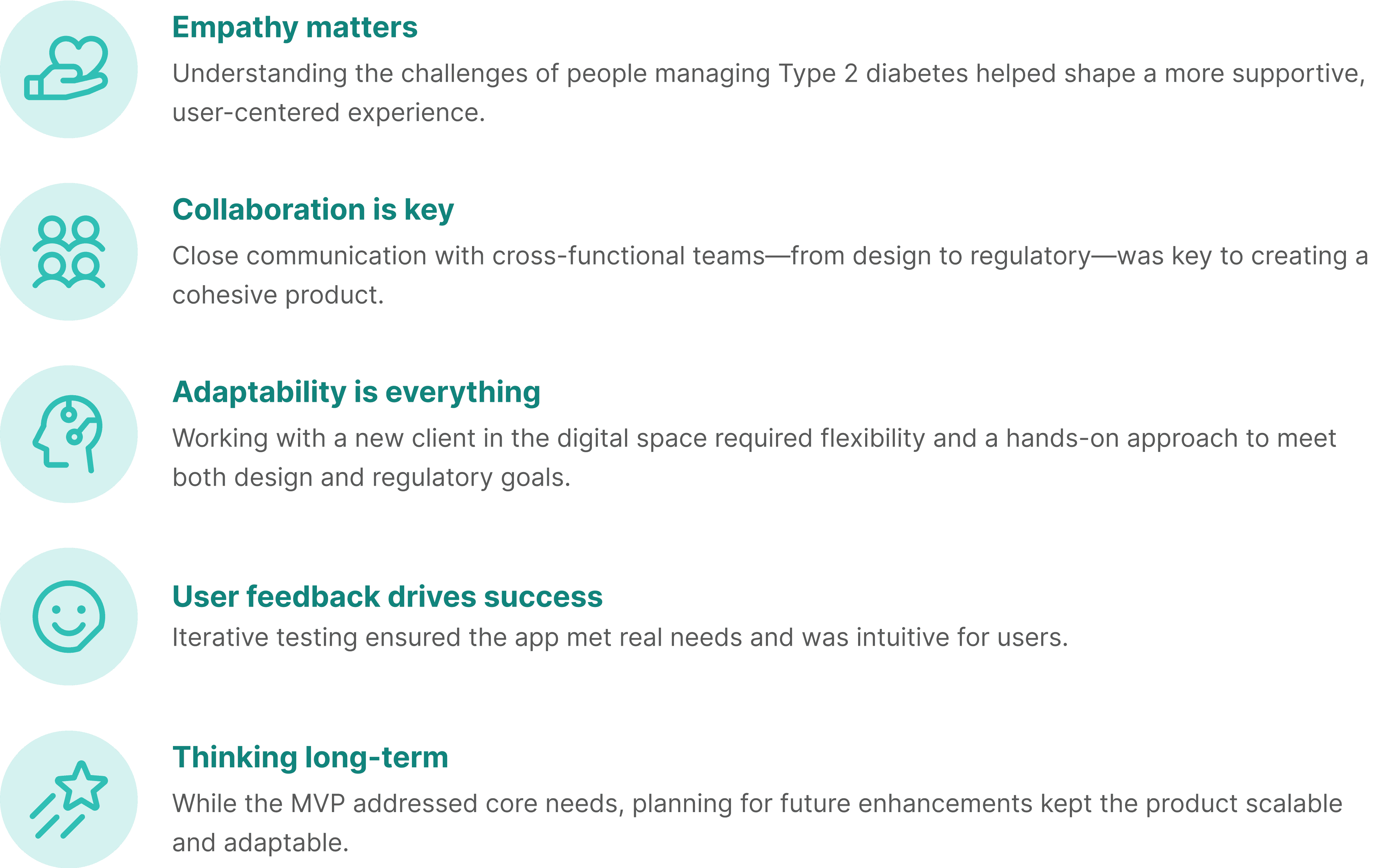
Lessons in design: collaboration & impact
This project was about more than just building an app—it was about creating a supportive, reliable experience for people managing a life-changing condition.
By combining human-centered design, regulatory alignment, and technical feasibility, we helped bring a smarter, more intuitive diabetes management tool to life.